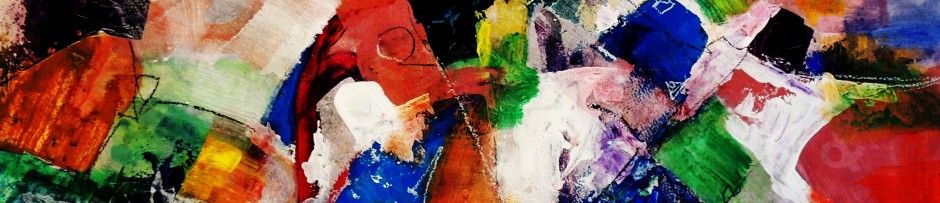

one of my minimalist drawings, (jgyoungmd)
I am a multidisciplinary artist working across improvisational music, visual imagery, and poetic language, often bringing these elements together in short multimedia works I think of as video poems. My music begins not with notes or plans, but with sound itself—alive, immediate, and unfolding—shaped through listening, interaction, and discovery.
I. Sound as Primary Material
At the center of my practice is a simple but far-reaching orientation: I compose with sound rather than with notes.
A note, in the traditional sense, is an abstraction—a symbol that represents pitch and duration. But before it becomes a note, sound is something more fundamental. It has texture, weight, color, attack, decay, resonance. It occupies space and time. It moves, or resists movement. It suggests direction.
I begin there.
When I sit at the piano—or work with a synthesizer or digital instrument—I do not start with a fixed idea of what I want to build. I begin with a sound, and then another. I listen to how one leans into the next. Some sounds invite continuation; others resist it. Some open space; others fill it. The piece emerges through this process of listening and response.
In this way, composition becomes less an act of construction and more an act of attention. The music is not imposed. It is discovered.
II. Improvisation as Living Process
My musical practice is rooted in free improvisation, developed over many years at the piano and extended through digital instruments, synthesizers, and computer-based environments.
The piano remains central. I often describe the process as a conversation with the instrument. I play something, I listen, and something new is suggested. There is no predetermined direction, much like speaking with a friend—nothing is pre-planned, yet the exchange develops its own coherence through careful listening.
At times, the music may touch on recognizable harmonic areas, even resembling jazz-like chord sequences. More often, however, it evolves through motifs and relationships that arise spontaneously in the moment. These motifs may return, transform, or dissolve, creating a sense of continuity that is felt rather than prescribed.
Over time, a personal vocabulary has developed—a kind of musical grammar that feels like my own. But it remains fluid, always changing, always open to what the next moment brings.
III. Music as Abstract Painting in Sound
The closest analogy to my process is abstract painting.
An abstract painter may begin with pigment—placing it, layering it, even disrupting the canvas—and gradually sensing relationships emerging: balance, contrast, density, space, gesture. The painting does not begin with a fixed image. It becomes what it is through the act of making.
My music unfolds in the same way.
There is often no predetermined beginning, middle, or end. Instead, the piece develops as a field of relationships. Certain sounds or textures begin to assert themselves. Others recede. Gradually, a form appears—not imposed from outside, but arising from within the interaction of elements.
Silence plays an essential role in this process. It is not absence, but space—something that frames and gives meaning to what is heard.
IV. Exploring the Fundamental Elements of Music
Alongside this intuitive process, I am drawn to the underlying elements of music in a more exploratory way.
Rhythm, timbre, pitch, silence, interval, harmonic motion—these can be approached almost as fundamental particles of musical experience. At times, I will isolate one of these elements and explore it in depth, listening closely to what it contains and how it behaves.
This is not theory used as prescription. It is theory as inquiry.
In this sense, my approach is not unlike that of a physicist looking beneath the surface of phenomena—toward underlying structures. But these elements are never left in abstraction. They return to the field of sound, where they recombine and interact in ways that are felt rather than calculated.
The result is a process that moves in two directions:
toward the elemental, and back into the living flow of sound.
V. Sound as Collaboration
An important part of my current work involves engaging with the sounds created by others.
Contemporary music technology offers thousands of sonic possibilities—each sound shaped by designers, engineers, and artists who have developed its character. I often encounter a sound I could not have imagined in advance, and it becomes the starting point for a piece.
In this way, my relationship to sound designers parallels a performer’s relationship to composers. Just as a performer interprets a written work, I interact with a sound. It suggests something—a gesture, a texture, a direction—and I respond.
The process becomes collaborative.
I do not simply use the sound; I listen to it, follow it, sometimes resist it, sometimes reshape it. The boundary between discovering a sound and creating one begins to blur. While I continue to learn the craft of sound design myself, the act of selecting, shaping, and placing sounds is already an essential part of my creative work.
Each piece becomes, in part, a dialogue—across time and medium—with other creators of sound.
VI. Technology as Extension of the Studio
Technology plays an important but secondary role in my process.
Using tools such as Logic Pro and Final Cut Pro, I record, edit, layer, and refine my improvisations. What begins as a spontaneous event may later be shaped through careful listening—expanded, reduced, or reorganized.
These tools allow me to work with multiple layers of sound and to integrate visual elements drawn from my own photographs, paintings, and graphic experiments. The studio becomes an extension of the improvisational process, not a replacement for it.
Even in editing, I am still listening for what the piece wants to become.
VII. Multimedia: The “Video Poem”
Many of my works take the form of short multimedia pieces I call video poems.
In these, music, image, and sometimes text interact in a reciprocal way. The visual elements—often drawn from my own photographs and paintings—are not illustrative. They are part of the same expressive field as the music. Sometimes the image leads, sometimes the sound. Each influences the other’s form and direction.
These works are often concise, but layered—like a poem, where meaning is carried as much by association and resonance as by explicit statement.
VIII. The Musical Diary
My improvisations frequently become part of an ongoing musical diary.
Each piece reflects a moment—its mood, its energy, its questions. I often code works by date, creating a record of evolving thought and feeling through sound. Over time, patterns emerge. Certain gestures return. A language develops.
But the diary is not retrospective. It is lived in real time. Each piece is both complete in itself and part of a larger, unfolding continuity.
IX. Larger Constructions and Orchestral Work
Some projects extend beyond solo improvisation into more complex constructions.
The orchestral improvisations began with music developed for my video Concerto for Foxes, Deer and Other Wild Ones, later incorporated into my DVD Word Salad. These works often started as simultaneous improvisations on multiple keyboards, which were then expanded and reworked into larger sonic environments.
The process combines spontaneity and reflection. What begins as free improvisation is later shaped through editing, layering, and orchestration, revealing structures that were implicit in the original material.
X. A Third Path: The Creator
I see three broad approaches to music.
There is the performer, who brings a composed work to life with precision, fidelity, and expressive nuance.
There is the composer, who constructs musical ideas into a form that can be realized by others.
And then there is the path I follow.
I create music for the experience of creating it. Not primarily to perform, and not primarily to produce a score for others, but to engage directly with sound as a living medium. My work exists in the act of making—in the moment where something new comes into being.
It is closer to painting than to traditional composition. It is shaped by listening rather than by plan. It does not always seek a defined beginning, middle, and end. Instead, it becomes a field of relationships, gradually clarified through attention.
XI. Intrinsic Worth
Underlying all of this is a commitment to intrinsic value in creative work.
The act of composing is not directed primarily toward a finished product or external validation. It is an engagement with sound itself. The satisfaction lies in the process—in the discovery of relationships, in the emergence of form, in the simple fact of bringing something into being.
Each piece is less a constructed object than a trace of an encounter—between intention and accident, between structure and freedom, between the known and the not yet imagined.
That thought feels like the missing center of everything you’ve been describing. It gives your whole approach a kind of quiet philosophical clarity.
XII. The Beginner’s Mind
There is a saying that the beginner has many possibilities, while the master has fewer. I find myself returning to music again and again as a beginner.
This is not a lack of experience, but a choice of orientation. Over time, I have developed a vocabulary, a way of hearing, a familiarity with my instruments and tools. But I try not to let that harden into habit or expectation. Each time I begin, I am interested in not knowing—in allowing the music to show me something I have not already understood.
I have no desire to become a master performer in the traditional sense, repeating and refining the same gestures toward perfection. That path has its own beauty, but it is not mine. What draws me is the moment before mastery—the moment of openness, where anything might happen, where sound is still free to become something unexpected.
To begin again is not to start over from nothing. It is to return to the source—to a place where listening is primary, where discovery is possible, where the work is alive.
In this sense, my practice is not about arriving at a fixed identity as a musician, but about remaining in a continuous state of becoming. Each piece is a new beginning. Each sound is an invitation.
To hear and download the music, go to the music page at soundclick.com/jgyoungmd where I have uploaded nearly 1800 wav files.
CDs and DVDs (no longer available through lulu.com)
Forest Glistens


__________________________________________________________
Cool Wave


_______________________________________________________________
Night Drift


_______________________________________________________________
Blue Eclipse


______________________________________________________________


____________________________________________________

